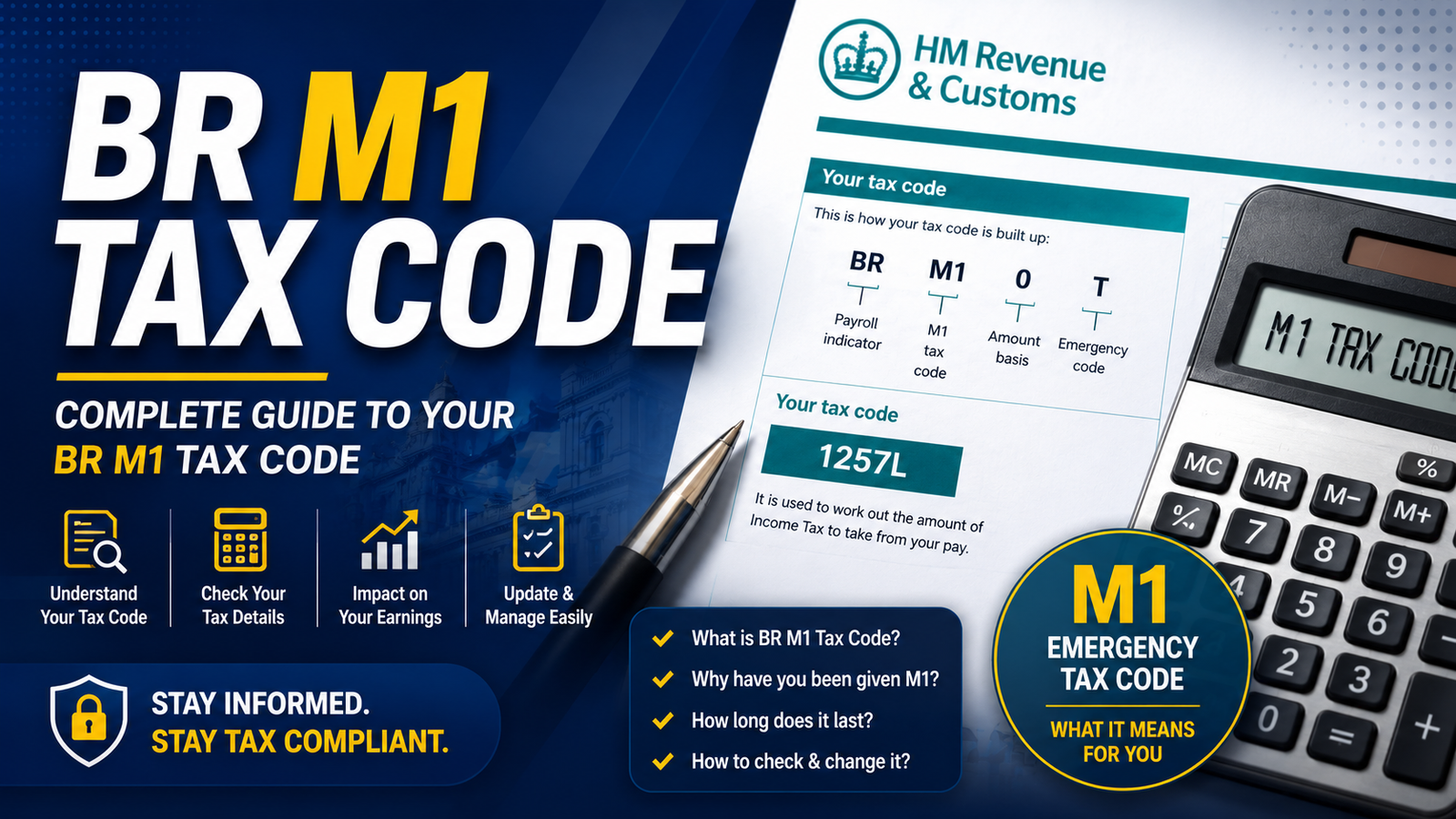
Understanding your tax code is essential for ensuring that you are being taxed correctly under the UK Pay As You Earn system. One of the more commonly misunderstood tax codes is the BR M1 tax code, which often appears unexpectedly on payslips and can cause confusion for employees, especially those starting a new job or working multiple roles. While it may look technical at first glance, the BR M1 tax code simply reflects a specific method of calculating income tax that HM Revenue and Customs uses in certain circumstances.
In the UK, tax codes are designed to inform employers how much tax to deduct from your wages before you are paid. The BR M1 tax code is one such instruction, and although it is temporary in many cases, it can significantly affect your take-home pay. This article provides a comprehensive explanation of what the BR M1 tax code means, why it is used, how it affects your earnings, and what steps you can take if you believe it has been applied incorrectly.
By the end of this guide, you will have a clear understanding of how the BR M1 tax code works within the wider UK tax system and how to ensure you are not paying more tax than necessary.
Understanding UK Tax Codes and Their Purpose
To fully understand the BR M1 tax code, it is important to first understand how UK tax codes function in general. A tax code is essentially a combination of letters and numbers that tells an employer how much tax-free income you are entitled to in a tax year.
Most tax codes are based on your personal allowance, which is the amount of income you can earn before you start paying income tax. However, when HM Revenue and Customs does not have enough information about your income or employment status, it may assign a temporary or emergency tax code instead.
The BR M1 tax code is one of these temporary codes. It is used to ensure that tax is still collected while your full tax situation is being reviewed. Although this system ensures continuity in tax collection, it can sometimes lead to employees paying more tax than they should in the short term.
Understanding this broader system helps to place the BR M1 tax code in context and explains why it is applied in certain situations without prior notice.
What Does the BR Tax Code Mean in the UK?
The BR part of the BR M1 tax code stands for “Basic Rate.” This means that all of your income from that employment or pension is taxed at the basic rate of income tax, without any personal allowance being applied.
In the UK, the basic rate of income tax is typically twenty percent for most taxpayers within the basic income band. When your tax code begins with BR, it means that every pound you earn from that specific source is taxed at this rate, regardless of how much you earn overall or whether you have already used your personal allowance elsewhere.
This usually happens when you have more than one job or pension, and your personal allowance is already being used against your main income source. It can also happen when HM Revenue and Customs does not yet have complete information about your employment history or earnings.
The BR code itself is not permanent and is often adjusted once HMRC updates your records or receives the correct information from your employer.
What Does the M1 Indicator Mean in BR M1 Tax Code?

The M1 part of the BR M1 tax code stands for “Month 1” or sometimes referred to as a non-cumulative tax basis. This is a very important detail because it affects how your tax is calculated over time.
When a tax code operates on a cumulative basis, it takes into account your earnings and tax paid from the beginning of the tax year. This ensures that your tax is balanced correctly over time. However, when a tax code includes M1, it means your tax is calculated only based on your current pay period, without considering previous earnings or tax deductions within the same tax year.
This is commonly used in emergency tax situations. It ensures that tax is collected immediately, but it does not take into account whether you may have overpaid or underpaid earlier in the year. As a result, it can sometimes lead to temporary overpayment of tax.
The M1 element is particularly important because it signals that your tax situation is still being reviewed and is not yet fully aligned with your overall income history.
What Happens When BR and M1 Are Combined?
When BR and M1 are combined to form the BR M1 tax code, it creates a very specific tax situation. It means that all income from that job or pension is taxed at the basic rate of twenty percent, and it is calculated on a non-cumulative basis.
This combination is often used when HM Revenue and Customs does not have enough information to assign a more accurate tax code. It is a temporary measure designed to ensure that tax is collected while your records are being updated.
In practical terms, this means that your employer will deduct twenty percent tax from your wages each pay period, without applying any personal allowance or adjusting for previous months’ earnings. While this ensures that you are paying tax, it may not reflect your true tax liability over the full year.
For many individuals, this results in slightly higher tax deductions initially, which may later be corrected once your tax code is updated.
Common Reasons You Might Be on a BR M1 Tax Code
There are several situations in which the BR M1 tax code may be applied to your income. One of the most common reasons is starting a new job without providing a P45 form from your previous employer. In such cases, your new employer may not have enough information about your previous earnings or tax status, leading to the use of an emergency tax code.
Another common situation is when you have more than one job or pension. HM Revenue and Customs will typically assign your personal allowance to your main source of income and apply BR to any additional income sources.
The BR M1 tax code can also appear if there has been a recent change in your employment status or if HMRC is still processing updated information about your income. In some cases, it may also be applied temporarily if there has been a delay in communication between your employer and HMRC.
Although it may seem concerning when you first see this tax code on your payslip, it is usually a short-term measure rather than a permanent tax arrangement.
How the BR M1 Tax Code Affects Your Pay
The BR M1 tax code can have a noticeable impact on your take-home pay. Because it applies a flat basic rate of tax without considering your personal allowance, you may find that more tax is deducted from your wages than expected.
This is particularly common in the first few months of a new job or during periods of employment change. Since the M1 element calculates tax only on a monthly or weekly basis without cumulative adjustment, there is no immediate correction for overpayments within the tax year.
For example, if you are entitled to a personal allowance but it is not yet applied, you may temporarily pay more tax than necessary. However, this is usually adjusted later once HMRC updates your tax records.
It is important to understand that while your net pay may be lower under this tax code, it does not necessarily mean you are losing money permanently. In many cases, any overpaid tax is refunded or adjusted later in the tax year.
BR M1 Tax Code and Emergency Tax Situations
The BR M1 tax code is often associated with emergency tax situations in the UK. Emergency tax codes are used when HMRC does not have enough information to assign a standard tax code.
When this happens, the system defaults to a temporary method of taxation to ensure that tax is still collected. The BR M1 tax code is one of the most common emergency tax codes used for employment income.
Although the term “emergency tax” can sound alarming, it simply refers to a temporary administrative measure. It does not indicate that you are in trouble with HMRC or that there is an error in your financial records. Instead, it means that your tax situation is still being processed.
Once HMRC receives the correct information, your tax code is usually updated automatically, and any overpaid tax is adjusted accordingly.
Multiple Jobs, Pensions, and the BR M1 Tax Code
The BR M1 tax code is frequently used when an individual has more than one source of income. In such cases, HMRC assigns the personal allowance to the main job or pension and applies BR to secondary income sources.
This ensures that tax is distributed correctly across multiple income streams. However, the M1 element may still be applied temporarily if HMRC is still updating your records.
For individuals with multiple jobs or pensions, it is especially important to check your tax codes regularly to ensure that the correct allowances are being applied. Incorrect tax codes across multiple income sources can lead to either overpayment or underpayment of tax.
Although the system is designed to balance out over time, understanding how BR M1 works in this context helps you identify potential issues early.
How to Check If You Are on BR M1 Tax Code
You can usually find your tax code on your payslip, P45, or P60 document. It is typically displayed near your earnings and deductions section. If you see BR M1 listed, it means that your income is being taxed at the basic rate on a non-cumulative basis.
It is important to review your payslip carefully, especially if your take-home pay seems lower than expected. If you are unsure whether the tax code is correct, it is worth checking with your employer or reviewing your HM Revenue and Customs online tax account.
While many cases of BR M1 are temporary, it is always advisable to confirm that your employment details have been correctly submitted to HMRC.
How to Fix or Change a BR M1 Tax Code
If you believe that the BR M1 tax code has been applied incorrectly or is no longer appropriate for your situation, the first step is to ensure that your employer has all the correct information about your previous employment. This includes providing a P45 if you have recently left a job.
In many cases, HMRC will automatically update your tax code once it receives the correct information. However, if the issue persists, you may need to contact HM Revenue and Customs directly to review your tax records.
Once your tax code is updated, your employer will adjust your deductions accordingly. If you have overpaid tax during the period you were on BR M1, this is usually refunded either through your payslip or at the end of the tax year.
Refunds and Adjustments After BR M1 Tax Code
One of the most important things to understand about the BR M1 tax code is that it does not usually result in permanent overpayment. If you have paid too much tax due to being on this code, HMRC will typically correct it once your full income information is processed.
This correction may come in the form of a tax refund or a reduced tax deduction in future pay periods. The timing of this adjustment can vary depending on how quickly your information is updated within the system.
In many cases, employees see their tax code corrected within a few months, especially once all employment records are aligned.
Common Misunderstandings About BR M1 Tax Code
Many people assume that the BR M1 tax code indicates a problem with their finances or that they are being penalised by HMRC. In reality, it is simply a temporary administrative measure used when information is incomplete.
Another common misunderstanding is that the BR M1 tax code will remain permanently. In most cases, it is only applied for a short period until HMRC has enough data to assign a standard tax code.
Some individuals also believe that they will lose money permanently due to this tax code, but this is not usually the case, as adjustments are typically made once the correct tax information is processed.
Conclusion: Understanding and Managing BR M1 Tax Code in the UK
The BR M1 tax code is an important part of the UK tax system that ensures tax is collected even when full employment information is not yet available. While it may initially seem confusing or concerning, it is generally a temporary measure used during transitions such as starting a new job, having multiple income sources, or waiting for HMRC to update your records.
Understanding that BR means all income is taxed at the basic rate and M1 indicates a non-cumulative calculation helps demystify how your pay is being processed. Although it can sometimes lead to higher short-term deductions, these are usually corrected once your tax code is updated.
By regularly checking your payslip and ensuring your employment details are accurate, you can minimise the chances of remaining on an emergency tax code for longer than necessary. Ultimately, the BR M1 tax code is part of a structured system designed to keep tax collection consistent while ensuring adjustments can be made once full information is available.
With the right awareness and timely action, you can ensure that your tax is always calculated fairly and accurately within the UK PAYE system.
You may also read: How Government Gateway Works in Practice